Why Adding a Bolster Changes a Yoga Pose More Dramatically Than a Block Does
Quick Answer: A block provides a fixed, rigid point of contact that supports a specific joint or limb at one precise height, while a bolster provides broad, yielding, full-body-length support that changes the entire relationship between gravity and the body across a much larger surface area — this difference in scale and rigidity is why substituting a bolster for a block in the same pose often shifts the entire feel and purpose of the posture, not just the support height.
A block and a bolster aren’t interchangeable versions of the same idea — they solve genuinely different structural problems, which is why swapping one for the other changes more than expected.
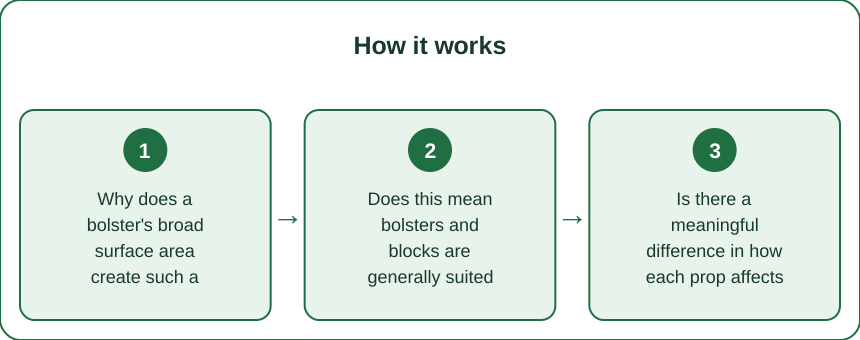
Why does a bolster’s broad surface area create such a different experience than a block’s point support?
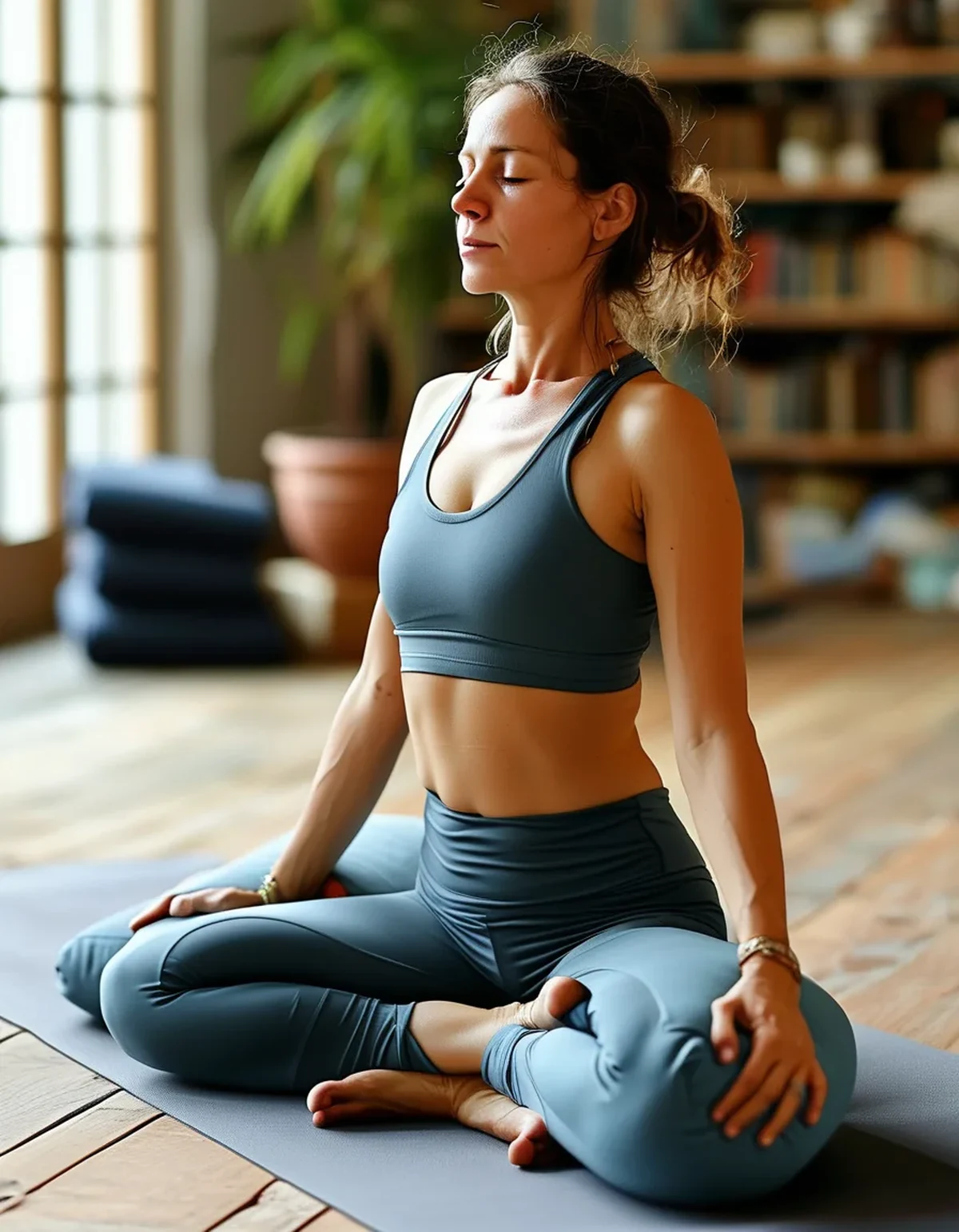
A block supports one specific joint or contact point at a fixed height, requiring the rest of the body to actively organize around that single support. A bolster’s long, broad surface distributes support across the torso, spine, or legs simultaneously, which allows much larger sections of the body to fully release muscular effort at once — this is why bolster-supported poses tend to feel more passively restorative, while block-supported poses often still require active engagement elsewhere.
Does this mean bolsters and blocks are generally suited to different categories of practice?
Broadly, yes — blocks are more commonly used in active, alignment-focused poses where a precise support height helps achieve correct joint positioning while the rest of the body still works, while bolsters are more common in restorative or yin practice, where the goal is broad, passive support that allows the nervous system to fully downshift. This isn’t an absolute rule, but it reflects the different structural purpose each prop is actually built for.
Is there a meaningful difference in how each prop affects breathing during a pose?
Yes — a bolster’s broad support under the torso in poses like supported fish or supported child’s pose allows the ribcage and diaphragm to expand more freely, since less muscular effort is needed to maintain the position, often resulting in noticeably deeper, slower breath. A block’s more localized support doesn’t create this same whole-torso release, since surrounding muscles are typically still engaged to maintain the rest of the pose’s alignment.
Can a firm bolster and a soft bolster actually change this effect further, beyond just bolster versus block?
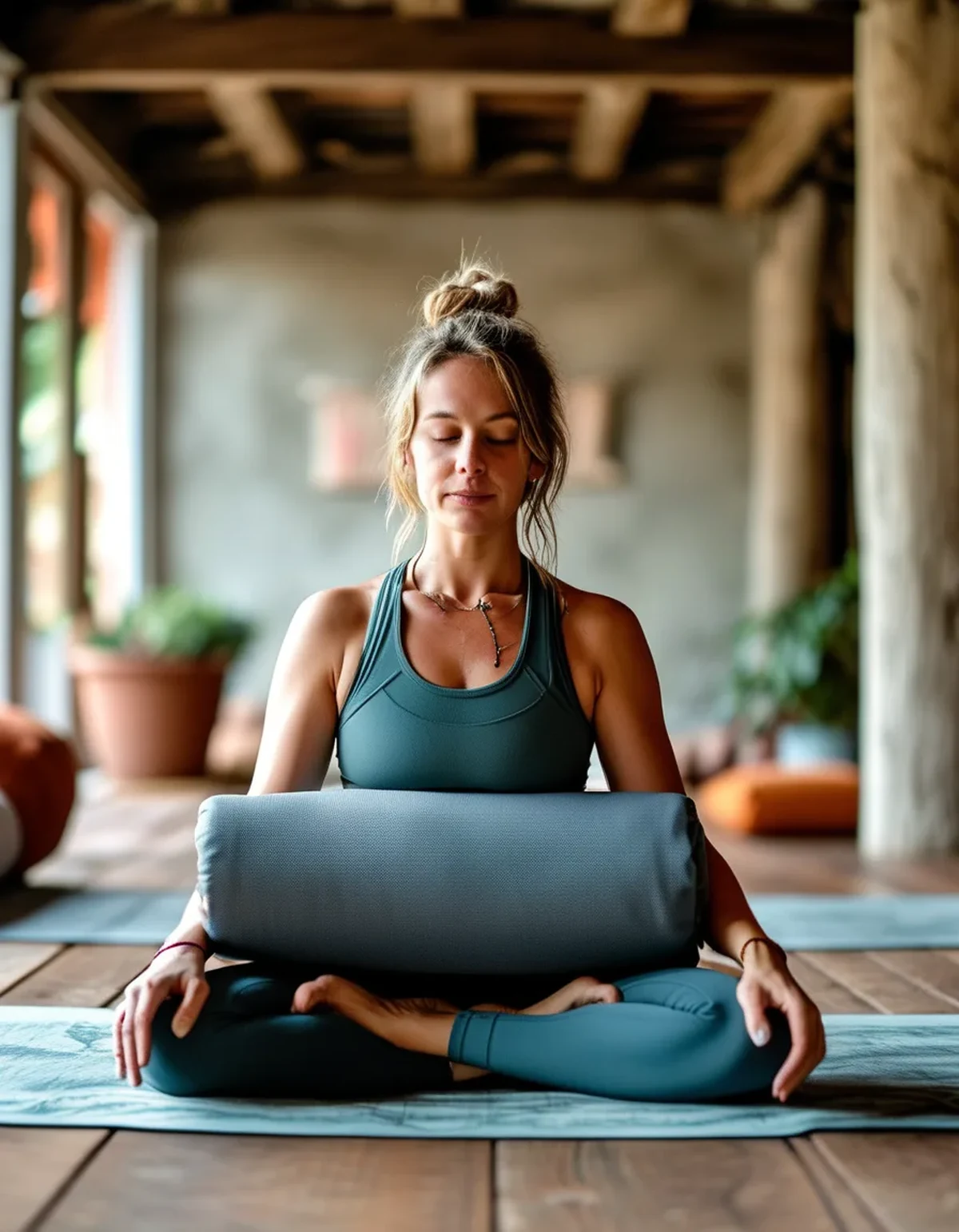
Yes, meaningfully — a firmer bolster provides more structural support with less give, closer in feel to a very large, softly padded block, while a softer, more compressible bolster molds more closely to the body’s shape, deepening the passive-release effect further. Choosing bolster firmness intentionally, based on whether more structure or more yielding softness is the goal, is worth considering rather than treating all bolsters as equivalent.
Why a Bolster Isn’t Just a Bigger Block
The temptation to think of a bolster as simply “an oversized block” misses the actual functional difference — a block asks the body to organize itself around a fixed point, actively maintaining the rest of the pose, while a bolster removes the need for that active organization across a much larger area, fundamentally changing what the pose is asking the nervous system and muscles to do, not just how high the support sits.
FAQ: Bolster Versus Block in Yoga Practice, Answered
Can a rolled-up blanket serve as an adequate substitute for a bolster if one isn’t available?
A firmly rolled blanket can approximate a bolster’s broad support reasonably well for many poses, though it typically won’t match a bolster’s consistent shape and firmness over repeated use.
Is it common to use a bolster and a block together in the same pose?
Yes, this is quite common in restorative practice — a bolster provides broad torso support while a block might support a specific limb or add height under the bolster itself for a different angle.
Does bolster shape (round versus rectangular) matter for this support effect?
Yes, somewhat — round bolsters tend to conform more to curved body areas like the spine in a backbend, while rectangular bolsters offer more stable, flat support for poses needing an even surface.
TL;DR:
- A block offers fixed, single-point support; a bolster offers broad, distributed, full-length support
- Bolsters allow much larger areas of the body to fully release muscular effort passively
- Blocks suit active, alignment-focused poses; bolsters suit restorative, passive-release poses
- Bolster firmness (firm versus soft) further changes how much structure versus yielding softness is offered
A bolster doesn’t just replace a block at a bigger size — it changes what a pose is actually asking the body to do, which is why the swap feels like a different practice entirely.
See It in Motion
Seen here: High Waist Printed Bootcut Yoga Pants with Pockets — shop it on bubblelime.com
Keep Reading
This article is for general informational and styling purposes only. Fit, sizing, and product availability may vary.