Why a Cork Block and a Foam Block Do Different Jobs
Quick Answer: A cork block is dense and unyielding, so it transmits force straight into the floor and gives you a true reference point for alignment. A foam block compresses 5 to 15mm under load, which makes it kinder for restorative work but unreliable for anything weight-bearing. Use cork for standing poses and any pose where a hand or foot presses hard into it; use foam for lying-down support, under knees, and anywhere comfort matters more than feedback.
You practise at home on foam. You go to a studio that stocks cork.
Same pose, same block height, and triangle suddenly feels completely different — steadier, but also somehow harder.
The block did not change your body. It changed what happens to the force you push into it, and that is a bigger variable than most prop guides admit.
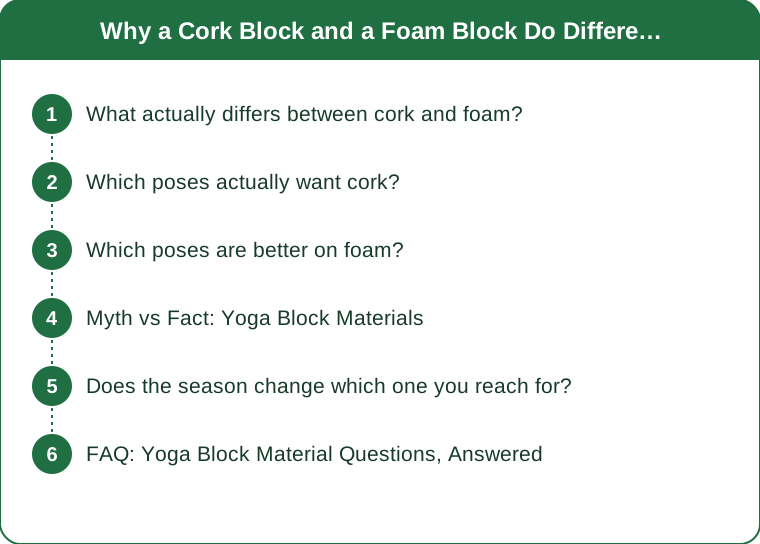
What actually differs between cork and foam?
Density, and everything else follows from it.
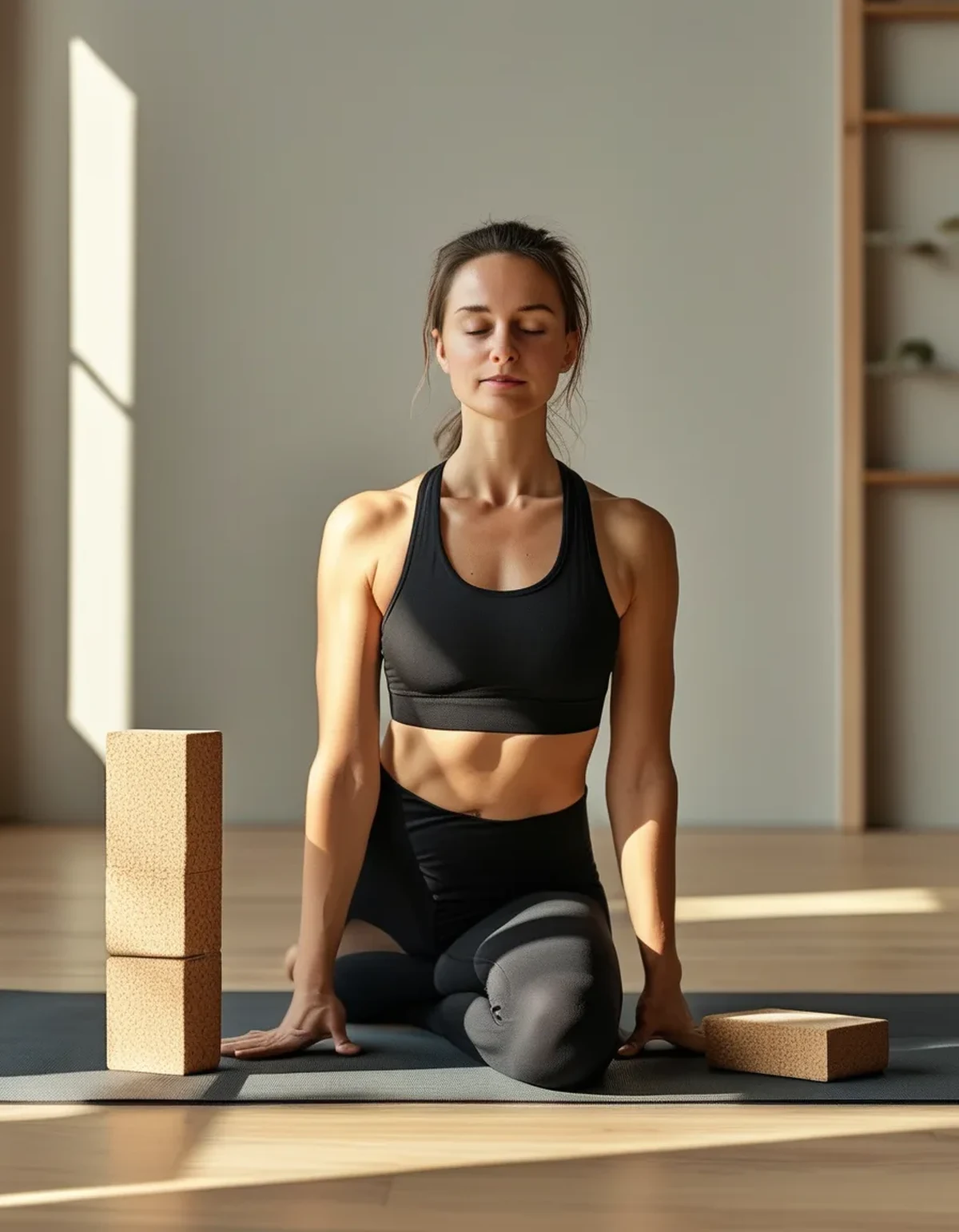
Cork weighs roughly three times as much as a comparable EVA foam block — typically 600 to 900g against 200 to 300g — and it barely compresses at all under body weight.
Foam compresses measurably. Press a hand hard into a foam block and it will give 5 to 15mm depending on density. That sounds trivial. In practice it means the block height you set up with is not the block height you practise at, and it changes the moment you load it.
Two consequences:
- Force transmission. Cork sends your push straight into the floor, so you get a genuine ground reaction. Foam absorbs part of it.
- Feedback. A rigid surface tells you exactly where your hand is in space. A compressible one blurs that information.
Neither is better. They are answers to different questions — one about stability, one about comfort.
Which poses actually want cork?
Anything where you press into the block to create length or lift.
Standing poses with a hand down — triangle, half moon, revolved triangle. You are pushing meaningfully into the block to open the chest, and a compressing block steals that push.
Any pose where the block is under a foot. Cork is safe to stand on; most foam is not, and a foam block under a standing foot is genuinely unstable.
Arm balances and preparation for them. Blocks under the hands in crow prep need to hold their height exactly.
Bridge with a block between the thighs — you are squeezing hard, and cork gives resistance to squeeze against.
The unifying test: if you are pushing into the block, use cork. If you are resting on it, foam is fine and often nicer.
Which poses are better on foam?
Anything restorative, and anything against bone.
Under the sacrum in supported bridge. Ten minutes on cork against the sacrum is uncomfortable for most people; foam distributes the contact.
Under the head or shoulders in supported reclining poses. Cork under an occiput is a hard, cold surface with no give.
Between the knees or ankles in side-lying work. A little compression is helpful here.
Under the knees in kneeling positions, though a folded blanket usually beats either block.
For travel. A foam block weighs a third of a cork one and takes a bag hit without chipping.
The temperature detail nobody mentions: cork is noticeably colder to the touch in an unheated autumn room, and that alone can pull you out of a long restorative hold.
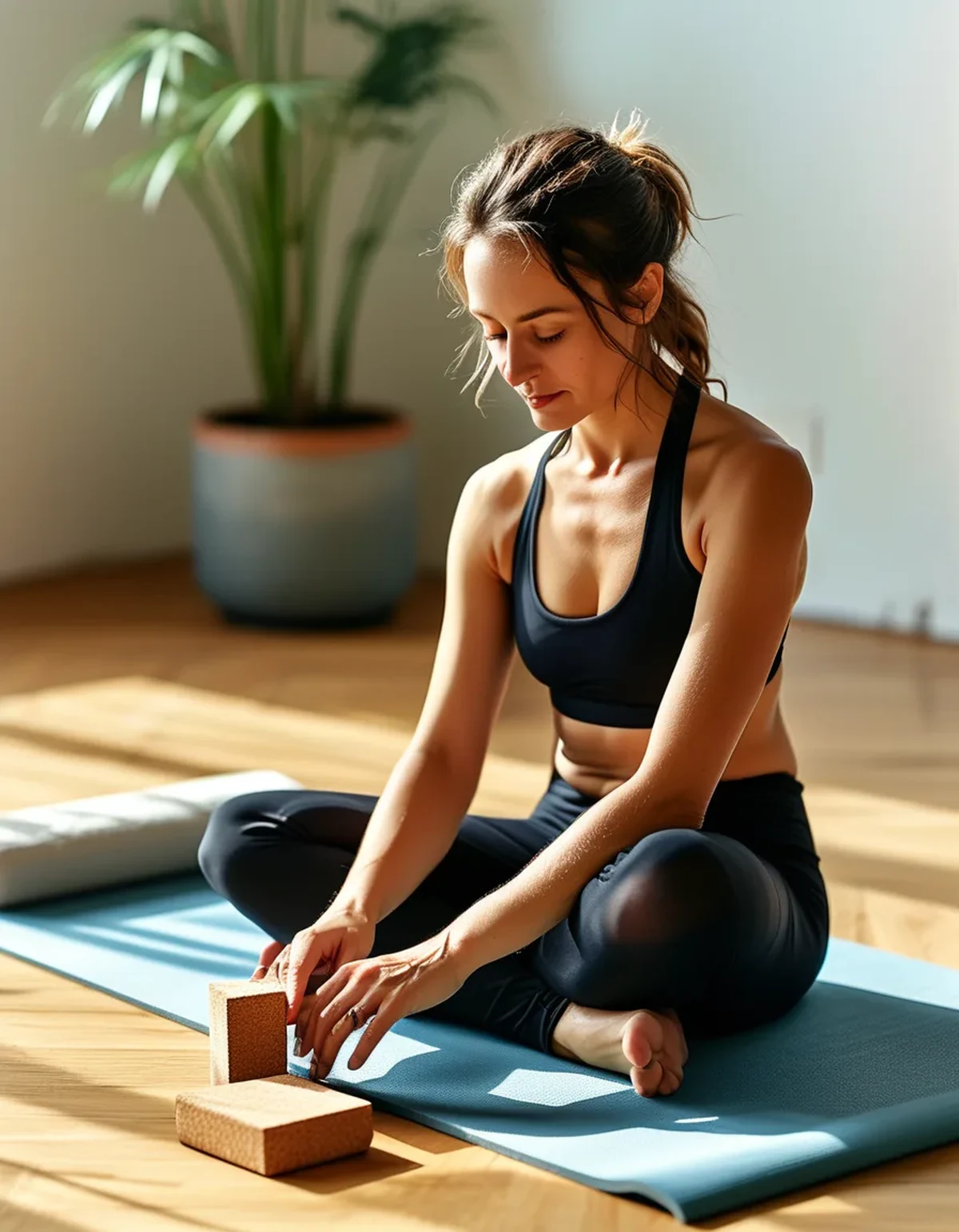
Myth vs Fact: Yoga Block Materials
Myth: Cork blocks are for advanced practitioners. Fact: cork is arguably more useful for beginners, because it gives clearer feedback about where your hand actually is. Ambiguous props make alignment harder to learn, not easier.
Myth: A block is a block — height is all that matters. Fact: a foam block set to its 9cm face may deliver 8cm under a loaded hand. On a compressed-range pose, one centimetre changes which muscles are working.
Myth: Cork is heavier so it is more stable in every use. Fact: cork is more stable under load, but its weight makes it worse overhead, and dropping one on a foot genuinely hurts. Weight is a cost as well as a feature.
Myth: Bamboo and wood blocks are the same as cork. Fact: they are even harder and more slippery when hands are damp. Cork’s slight surface texture is a real advantage for grip.
Does the season change which one you reach for?
More than you would expect, and autumn is the switchover point.
Cool rooms change grip. As studio and home temperatures drop, hands are drier and cork’s textured surface grips better than smooth foam. That is a point for cork in standing work.
Long holds get longer. Practice tends to shift toward restorative and yin work as the light fades, which means more time resting body weight on a prop rather than pushing into one. That is a point for foam, or for a bolster.
Cold cork is genuinely cold. A cork block that has sat in an unheated room overnight sits at room temperature and stays there. Under a sacrum for eight minutes, that is distracting.
The practical setup for autumn: one cork block for standing work, one foam for floor work. Two blocks of different materials is a more useful pair than two identical blocks, which is the opposite of how most people build a prop collection.
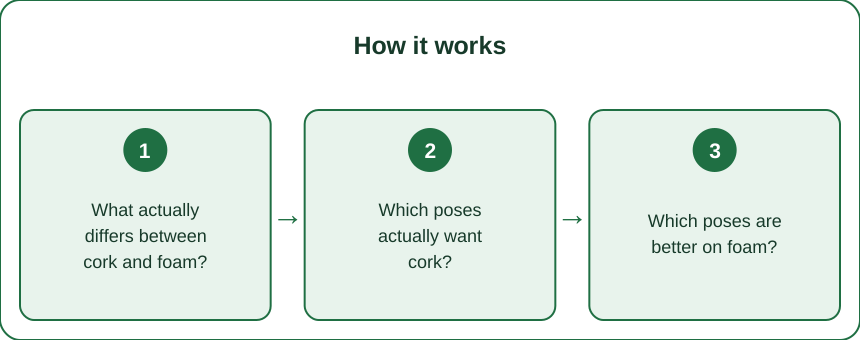
FAQ: Yoga Block Material Questions, Answered
If I can only own one, which should it be?
Cork, for most people. It does everything foam does adequately, plus the weight-bearing work foam cannot do. The exception is anyone practising mainly restorative yoga, where foam or a bolster is the better single buy.
Do cork blocks wear out?
They chip at the edges and corners over years, and the surface can smooth with heavy use. Structurally they last far longer than foam, which permanently compresses over time and loses its stated height.
Can I clean them the same way?
No. Foam wipes down with mild soap and water easily. Cork is porous — use a barely damp cloth, avoid soaking it, and let it air dry fully or it can hold moisture and smell.
TL;DR:
- The real difference is density, not height: foam compresses 5 to 15mm under load, cork essentially does not.
- Push into it → cork. Standing poses, blocks under feet, arm balance prep, anything squeezed.
- Rest on it → foam. Sacrum, head, between the knees, restorative holds, travel.
- Autumn shifts practice toward long holds, so the ideal home kit is one of each, not two of the same.
Height is the setting everyone talks about. Material is the setting that decides whether that height actually holds when you put your weight on it.
See It in Motion
Seen here: Bootcut Capri Yoga Pants with Pockets — shop similar styles on bubblelime.com
Keep Reading
This article is for general informational and styling purposes only. Fit, sizing, and product availability may vary.