Why Changing Your Block Height Changes Which Muscle Does the Work
Quick Answer: A block’s three heights are not easy, medium and hard - they are three different poses. A tall block in triangle keeps the chest open and trains rotation; a low block deepens the side bend and trains hamstring length. Neither is more advanced. Choose the height that lets you hold the shape the pose is actually about, and expect to change heights within a single practice as you warm up.
You reach for the block on the tall end, get stronger over a year, and switch to the floor.
That is a reasonable story and it is not what the block is for.
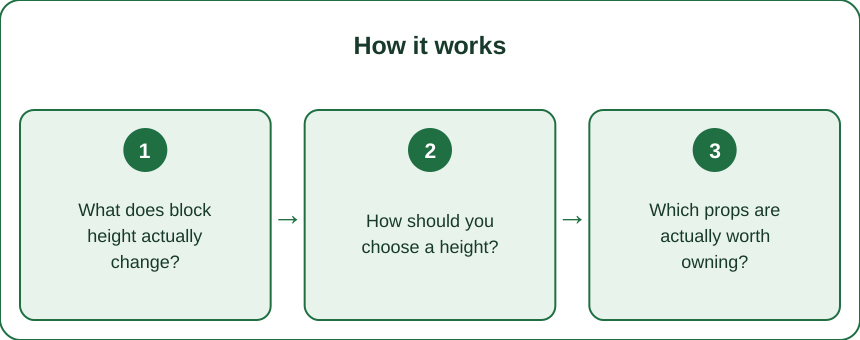
What does block height actually change?
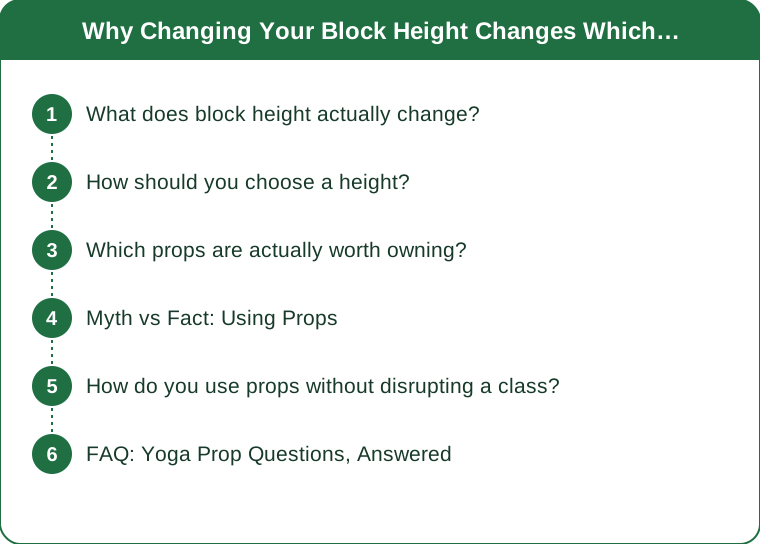
Height changes where your torso can go, which changes which structures limit the pose and which muscles have to work.
In triangle pose, a tall block keeps the chest rotating open and puts the work in the obliques and the top-side shoulder. Reaching to the floor usually collapses the chest forward and turns it into a hamstring stretch.
Both are valid; they are different poses. The instruction to reach further is only correct if you know which version you are training.
Height also changes the load distribution. A supported hand takes weight; an unsupported one does not, and that changes what the standing leg and the trunk have to do.
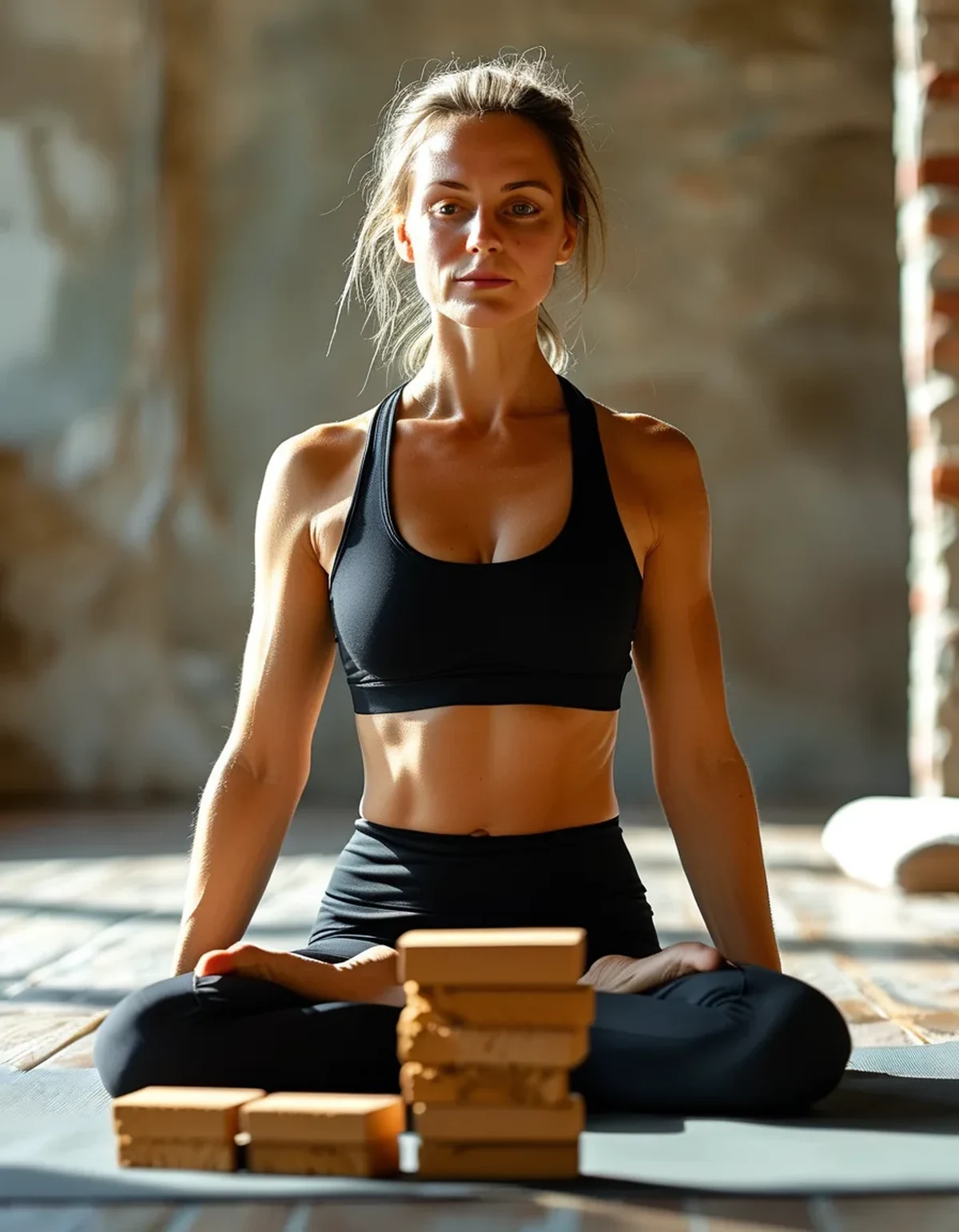
A block under the hips in seated poses tilts the pelvis forward, which lets the spine lengthen instead of rounding - a completely different pose from the same shape without it.
And the effect is largest in the poses people modify least, which is why so many practitioners are unknowingly training the wrong thing for years.
How should you choose a height?
Ask what the pose is about, then pick the height that preserves it. If the pose is about chest rotation, use whatever height keeps the chest rotating.
Tall height is the default for standing poses with a hand toward the floor - triangle, half moon, revolved triangle - for most people most of the time.
Medium height suits the same poses once you are warm, and switching mid-practice is normal rather than inconsistent.
Flat height works as a small lift for hands in lunges or for the back heel in warrior one.
Under the hips, use whatever height lets you sit with the pelvis neutral and the spine long. For many people that is one block, for some it is two, and it is not a measure of anything.
And use two blocks whenever the shape calls for two hands, which people avoid for reasons that are entirely about optics.
Which props are actually worth owning?
Two blocks, not one. Symmetrical poses need two and the second one costs very little.
A strap, which is the most useful prop for anyone with limited shoulder or hamstring range and the one most commonly skipped.
A folded blanket, which is the most versatile object in the list - under hips, under knees, under the head, rolled under the ankles.
A bolster, if you do restorative work, where it genuinely changes what is possible. A firm couch cushion works to start.
Cork blocks are heavier and more stable than foam; foam is softer and better under bony contact points. Cork is the better single purchase for standing poses.
And a wall is free and underrated - it is the best balance and alignment prop available and it costs nothing.
Myth vs Fact: Using Props
Myth: props are for beginners. Fact: experienced practitioners and teachers use them constantly, because they let you find a specific shape rather than approximate it. Iyengar practice - among the most technically demanding traditions - is built around them.
Myth: using a block means you are not flexible enough. Fact: it frequently means you are prioritising a different part of the pose. A tall block in triangle is a choice about what you are training, not a compensation.
Myth: you should progress off props over time. Fact: some poses are better with props permanently, particularly seated poses for anyone with tight hips. There is no destination where props stop being useful.
Myth: more depth is better. Fact: depth beyond your controllable range means passive structures taking load that muscles should. Controlled range is the useful range.
Myth: a strap is a shortcut. Fact: a strap lets you maintain the alignment of a pose while working at your actual range. Without it, most people compensate elsewhere - usually the lower back.
Myth: props slow down your practice. Fact: setting them up before class and having them within reach makes practice smoother, and mid-practice height changes take about two seconds.
How do you use props without disrupting a class?
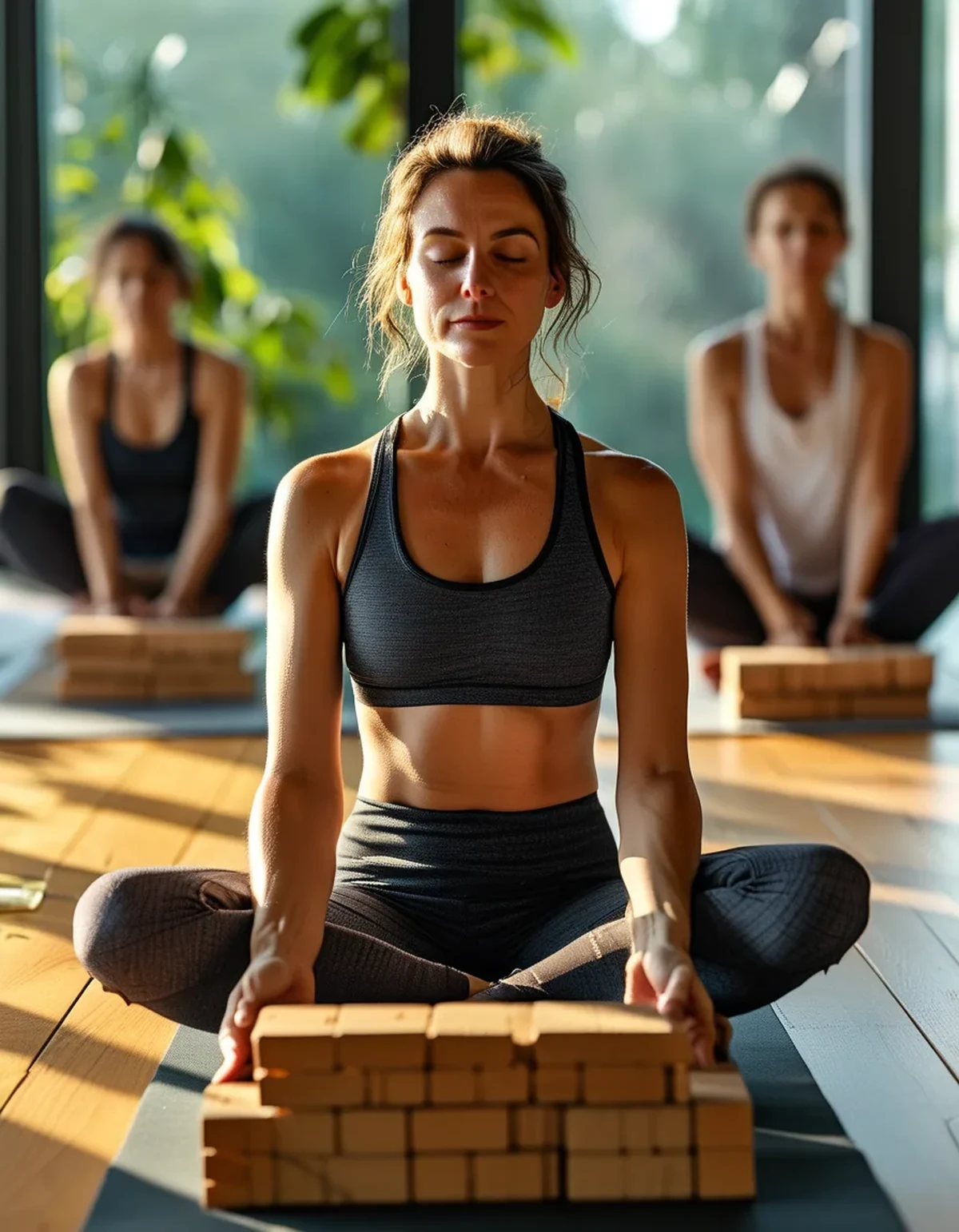
Set up two blocks, a strap and a blanket before class starts, within arm’s reach on the side you will need them.
Change height mid-pose without ceremony. It takes two seconds and nobody is watching.
Use the wall at the back or side of the room if you want it, which most teachers actively encourage.
Ask the teacher after class which height suits the version they are teaching, since the same pose is cued differently across traditions.
Bring your own strap if the studio’s are worn, since a stretched strap is genuinely less useful.
And practise with props at home in the same configuration you use in class, so the setup becomes automatic rather than a decision.
FAQ: Yoga Prop Questions, Answered
Which block height should I use in triangle pose?
Whichever lets your chest stay rotated open. For most people warming up, that is the tall height. Reaching the floor with a collapsed chest is a different pose, not a better one.
Do I need one block or two?
Two. Symmetrical poses need a pair, and the second block is inexpensive relative to how often you will want it.
Cork or foam?
Cork for stability under standing poses; foam for comfort under bony contact points. If buying one pair, cork is the more versatile choice.
Is it bad to always use props?
No. Some poses are better with props indefinitely, and prop use is standard in technically rigorous traditions rather than a beginner marker.
What does a strap actually do?
It extends your reach so you can hold a pose’s alignment at your current range instead of compensating - usually through the lower back or the shoulders.
Can I substitute household objects?
Yes to start - a thick book for a block, a belt for a strap, a firm cushion for a bolster. Blocks are inexpensive enough that upgrading is worth it once you practise regularly.
TL;DR:
- A block’s three heights are three different poses, not three difficulty levels.
- In triangle, a tall block trains chest rotation; reaching the floor usually turns it into a hamstring stretch.
- Choose the height that preserves what the pose is actually about, and change heights as you warm up.
- Own two blocks, a strap and a blanket - the second block and the strap are what people skip.
- A block under the hips in seated poses lets the pelvis tilt forward so the spine can lengthen.
- The wall is the best free prop in the room.
Props are a choice about what you are training, not a measure of what you can do.
See It in Motion
Seen here: Super High Waist Embossed Yoga Leggings with Inner Pocket — shop it on bubblelime.com
Keep Reading
This article is for general informational and styling purposes only. Fit, sizing, and product availability may vary.