Why Using a Yoga Block Isn't Cheating — It's Actually Training You Better
Quick Answer: A yoga block isn’t a crutch for people who ‘can’t do the real pose’ — it’s a tool that lets you access correct alignment at your current flexibility level, which builds the actual strength and mobility needed to eventually not need it, rather than faking a deeper stretch with compromised form.
The idea that props are for beginners who haven’t ‘graduated’ yet is one of the most persistent and least accurate ideas in yoga, and it keeps a lot of people from using tools that would genuinely improve their practice.
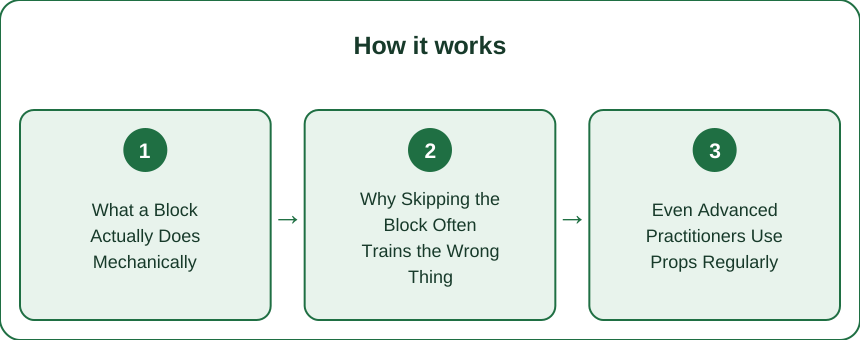
What a Block Actually Does Mechanically
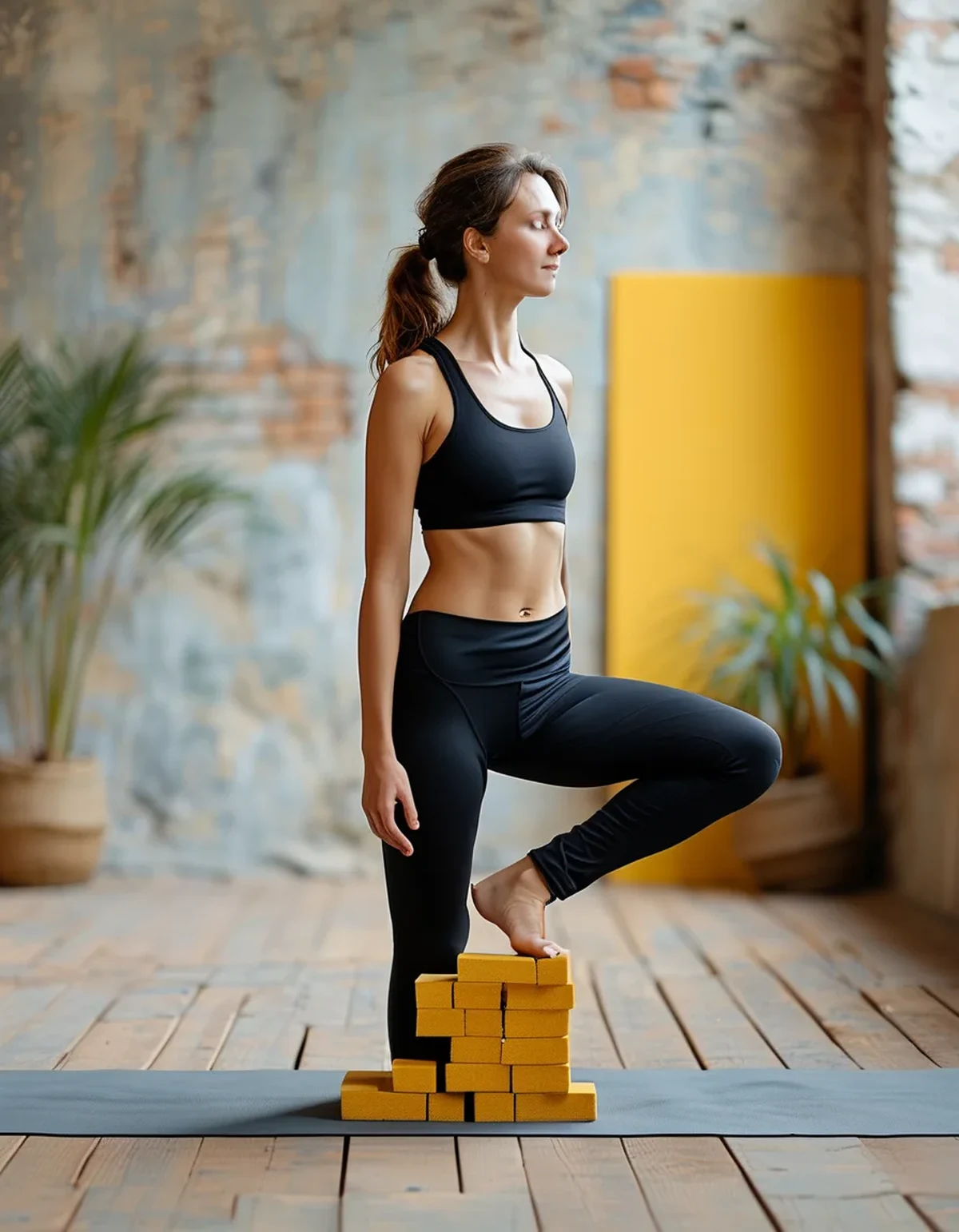
In a pose like a standing forward fold with hands reaching for the floor, someone with tighter hamstrings will round their lower back to get their hands down, which trades a stretch in the target muscle for strain on the spine. A block placed under the hands brings the floor up to meet your current flexibility, letting your spine stay in the correct, safe alignment while the target muscles — hamstrings, in this example — still get the stretch. The pose is technically ‘less deep’ with the block, but the alignment is more correct, which is the part that actually matters for both safety and long-term flexibility gains.
Why Skipping the Block Often Trains the Wrong Thing
Reaching for the floor without adequate flexibility usually means compensating somewhere else in the body — a rounded spine, a collapsed shoulder, a locked knee — and repeating that compensation pattern regularly reinforces poor movement habits rather than building genuine flexibility. Using the block removes the incentive to compensate, because the goal shifts from ‘touch the floor’ to ‘maintain correct form at whatever height is available today,’ which is a more honest and more productive target.
Even Advanced Practitioners Use Props Regularly
Experienced teachers and long-time practitioners use blocks, straps, and bolsters constantly — not because their flexibility regressed, but because props allow precise adjustments to alignment and intensity that hands and floor alone don’t offer. A block under the sacrum in a restorative pose, for instance, isn’t a workaround for anything; it’s a deliberate choice that changes what the pose is doing entirely. Seeing advanced practitioners use props regularly is a useful reality check against the ‘props are for beginners’ idea.
Straps, Bolsters, and Wheels Serve Different Specific Purposes
A strap extends your reach in poses like seated forward folds, letting you maintain a straight spine while gradually working on flexibility rather than folding your back to reach further. A bolster supports restorative poses, allowing full relaxation into a stretch rather than holding tension to stay upright. A yoga wheel supports backbends, offering controlled, adjustable depth. Each tool solves a specific mechanical problem, and learning what each is actually for changes how useful your practice becomes.
How to Know When You’re Ready to Use Less Support
The signal isn’t a specific number of classes or weeks — it’s whether you can maintain the same correct alignment without the prop that you had with it. Testing this occasionally, rather than removing props on a schedule, respects the fact that flexibility develops at different rates for different people and different poses, and there’s no real downside to using a prop for longer than someone else might need it.
Myth vs Fact: Needing Props Means You’re Not Flexible Enough for ‘Real’ Yoga
Myth. Flexibility varies enormously by body type, past injuries, and even time of day, and needing a prop reflects your current physical starting point, not your commitment or capability as a practitioner. Fact: using props correctly according to your body’s actual needs is considered strong practice by most experienced teachers, while skipping them to force a deeper-looking pose is generally seen as the less skilled approach, because it prioritizes appearance over the pose’s actual mechanical purpose.
FAQ: Yoga Props Questions, Answered
Do I need to buy props, or can I use household items?
Household substitutes work fine to start — a stack of books for a block, a belt or scarf for a strap — though dedicated props are more stable and durable if you practice regularly.
Should a beginner use props in every pose?
Not necessarily every pose, but being willing to reach for one whenever alignment feels compromised is a good default habit to build from the start.
Will using props slow down my flexibility progress?
No — the opposite is more often true, since maintaining correct alignment with a prop builds the right movement patterns, while forcing depth without one tends to reinforce compensations that can actually slow real progress.
TL;DR:
- A block brings the floor up to your current flexibility, keeping alignment correct instead of compromising it
- Skipping props to reach further often just trades a target-muscle stretch for a compensation pattern elsewhere
- Experienced practitioners use props regularly and deliberately, not just as a beginner phase
- Readiness to use less support is about maintained alignment, not a timeline
Props aren’t the training wheels of yoga — they’re closer to a level, making sure what you’re building is actually straight.
See It in Motion
Seen here: Racerback Tank Top - White — shop similar styles on bubblelime.com
Keep Reading
This article is for general informational and styling purposes only. Fit, sizing, and product availability may vary.