Why the Same Block Height Feels Wrong on Different Days
Quick Answer: Block height feels different day to day because joint range of motion genuinely varies — by a meaningful margin — with time of day, temperature, hydration, sleep and how you trained yesterday. Props are not a fixed setting you graduate from; they are an adjustment you make each session. Choosing height by how the pose feels today, rather than by what you used last week, is the entire skill.
The block was at its lowest height all last month and it felt right.
Today, on the same block, in the same pose, you cannot reach the floor without your back rounding.
You did not lose flexibility overnight. Range is simply not a constant.
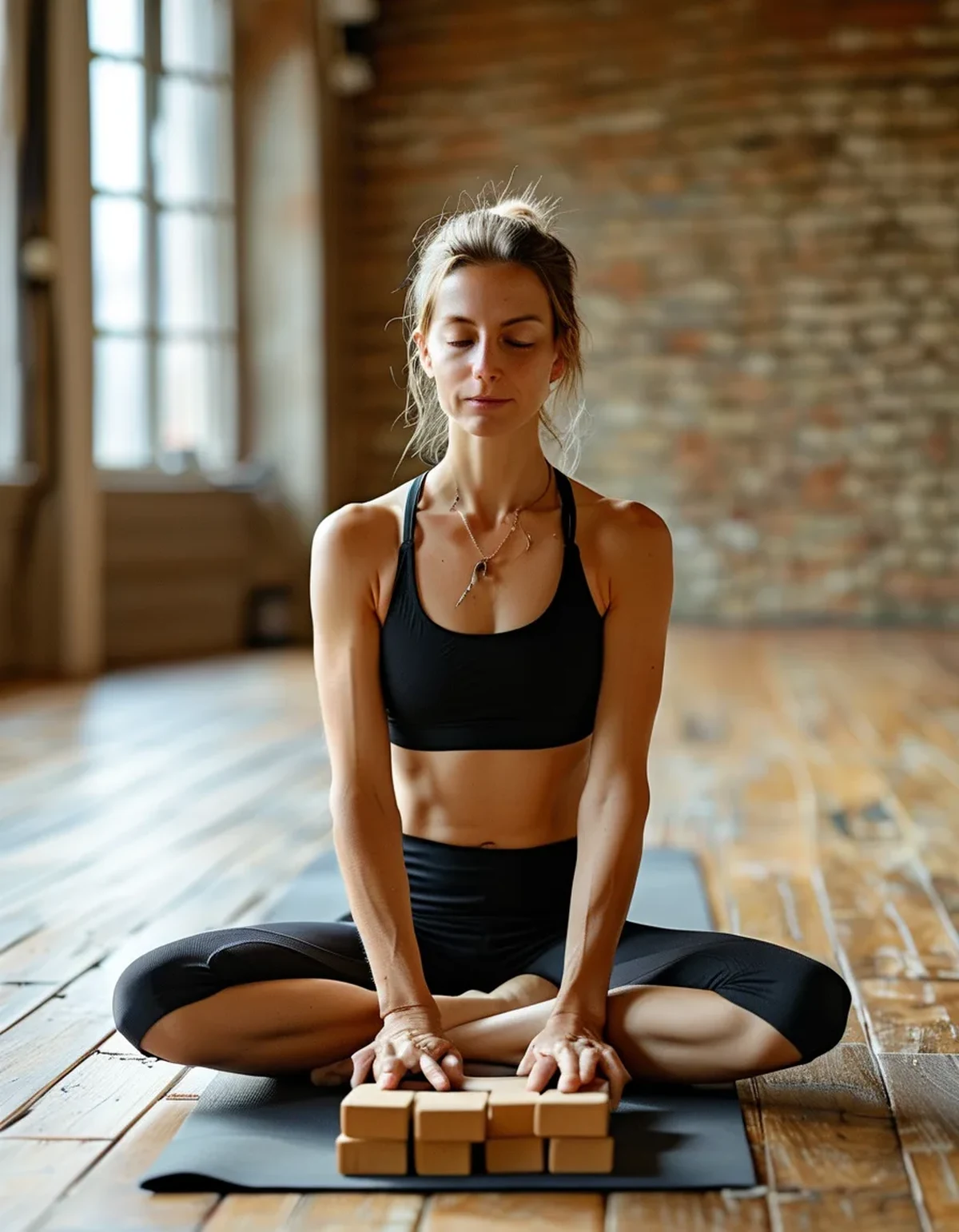
Why does your range of motion change so much between days?
Several factors move at once, and none of them are about how flexible you are.
Time of day matters most. Spinal discs lose fluid through the day and tissue temperature rises, so forward folds are typically hardest first thing in the morning and easiest in the late afternoon.
Tissue temperature changes stiffness directly. Warm connective tissue is measurably more extensible. A cool room after a cool morning genuinely reduces range before you have done anything.
Yesterday’s training is still present. Muscle soreness reduces range through protective tension, not through tightness. Blocks should go up after a hard leg day.
Sleep and stress alter baseline tone. The nervous system sets resting muscle tone, and a poor night raises it. This is a real effect, not imagination.
Hydration affects tissue behaviour. Well-hydrated connective tissue glides more easily. Dehydration shows up as stiffness before it shows up as thirst.
And the menstrual cycle shifts ligament laxity for many people, with range often noticeably greater around ovulation. Tracking it can explain weeks of otherwise confusing variation.
How should you actually choose a block height?
By the quality of the pose, never by the number on the block.
Choose the height that lets the spine stay long. In a standing forward fold or triangle, if your lower back rounds, the block is too low. That is the entire test.
Start higher than you think and lower it within the pose. It is far easier to reduce support once warm than to rescue a pose you entered badly.
Expect to change height mid-session. By the third round of a sequence you are warmer, and the block that was necessary at the start may be in the way.
Different poses need different heights on the same day. Hips and hamstrings do not warm at the same rate. Using one setting for the whole class is a false economy.
Two blocks are far more useful than one. Asymmetric poses often need different support on each side, and most people have a genuine side-to-side difference.
Height is not a scoreboard. A pose done well on the tall setting is worth more than a compromised pose on the low one, every single time.
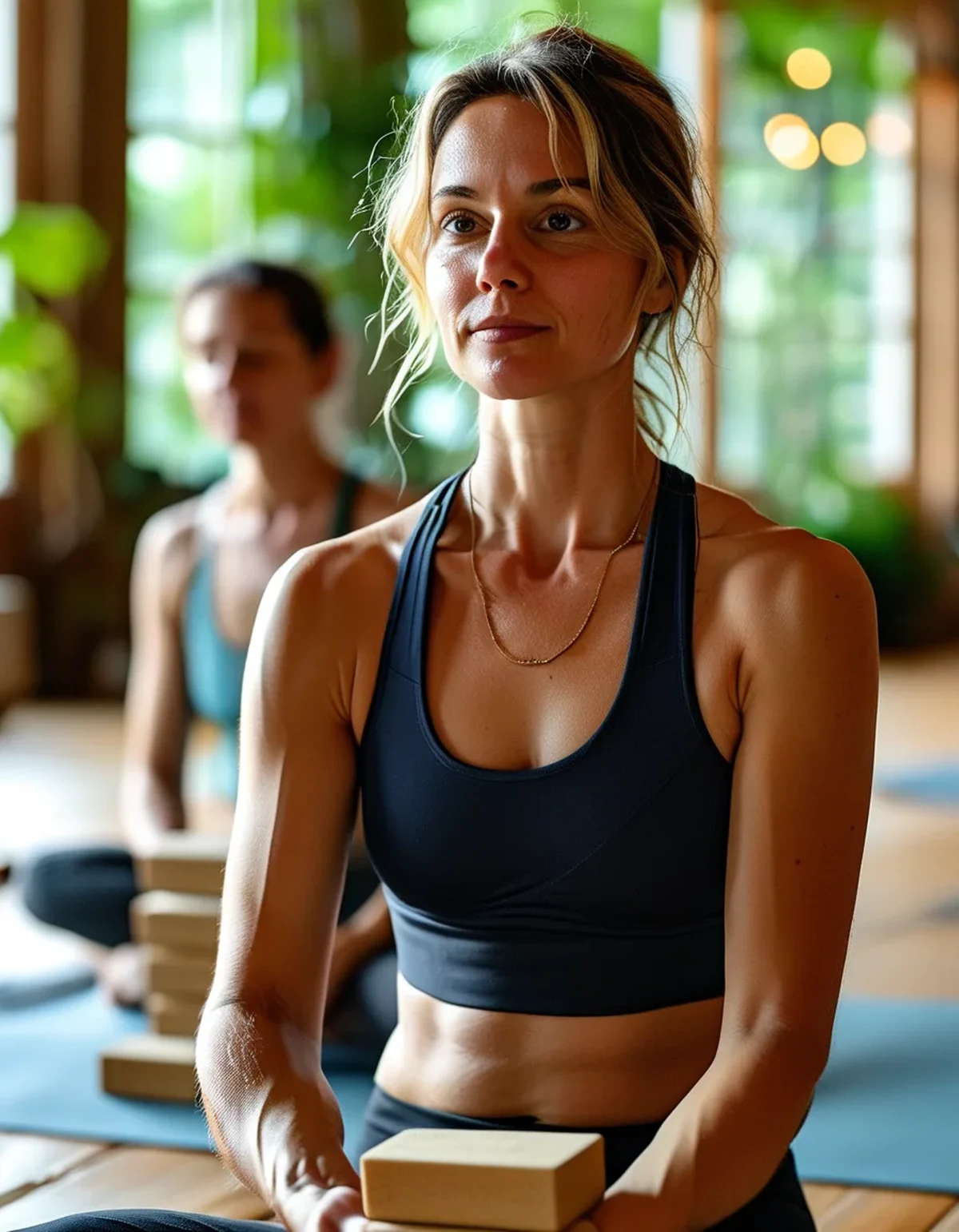
What are props actually for?
Not what most beginners assume, and understanding this changes how you use them.
They bring the floor to you. The purpose is to let you achieve the intended shape and action of the pose, not to make it easier.
They allow you to hold poses longer. Supported poses can be held for minutes rather than breaths, which is where restorative benefit comes from.
They protect the vulnerable joint. A block under the hand in triangle takes load off the lower back; a bolster under the knees takes it off the lumbar spine.
They make the target sensation findable. In many poses the intended stretch only appears once support removes the compensation. Without the prop you are stretching somewhere else entirely.
Experienced practitioners use more props, not fewer. In Iyengar-influenced traditions props increase with precision, which is the opposite of the beginner assumption.
Seasonal note: as autumn arrives and rooms cool, most people find they need a height more than they did in summer. Adjusting upward as the weather turns is expected, not regression.
Myth vs Fact: Yoga Props
Myth: props are for beginners. Fact: they are used most by the most precise practitioners. Prop use tracks understanding, not inability.
Myth: you should aim to stop using them. Fact: some poses are better supported permanently. Whether you need the block today is the only relevant question.
Myth: a block is a block. Fact: cork is heavier, firmer and more stable for weight-bearing; foam is lighter and kinder under bone. Most people benefit from having both.
Myth: using a strap means your shoulders are tight. Fact: a strap lets you find the correct action rather than faking the shape. It often reveals that the limitation was control, not length.
Myth: more support means less benefit. Fact: supported poses held for two to five minutes produce the parasympathetic response that short unsupported holds do not. The benefit is different, not less.
Myth: blocks are only for forward folds. Fact: a block between the thighs in bridge, under the sacrum in supported bridge, or between the hands in downward dog changes the pose fundamentally. Most people use maybe a fifth of what a block can do.
FAQ: Yoga Prop Questions, Answered
How many blocks should I own?
Two. It is the difference between working around your body and working with it, and the second block costs very little.
Cork or foam?
Cork for weight-bearing and standing poses, foam for anything resting against bone. If choosing one, cork is more versatile.
Is a bolster worth it?
If you do any restorative work, yes. A firm bolster is the piece people say they should have bought sooner. Folded blankets substitute reasonably.
Why do I need a block on one side and not the other?
Side-to-side asymmetry is completely normal and near-universal. Support each side as it needs, rather than matching them.
Should my range improve week to week?
Over months, yes. Week to week it fluctuates for all the reasons above, so weekly comparisons are close to meaningless.
Can props hide bad alignment?
They can if used to force a shape. Used to maintain a long spine and a findable sensation, they do the opposite.
This is general information, not medical advice. Sharp joint pain in any pose, supported or not, means come out of it.
TL;DR:
- Range of motion genuinely varies day to day with temperature, time of day, sleep, soreness and cycle.
- Choose block height by whether the spine stays long, never by what you used last week.
- Start higher and lower it mid-pose as you warm; expect different heights for different poses.
- Props exist to bring the floor to you, not to make the pose easier — experienced practitioners use more, not fewer.
- Own two blocks; asymmetry between sides is normal and worth supporting properly.
Next session, set the block one height higher than usual and see whether the pose actually improves. It usually does.
See It in Motion
Seen here: Super High Waist Embossed Yoga Leggings with Inner Pocket — shop it on bubblelime.com
Keep Reading
This article is for general informational and styling purposes only. Fit, sizing, and product availability may vary.