Why Using Two Yoga Blocks Works Completely Differently Than Using One
Quick Answer: A single block typically supports one side or one point of contact (like under a hand in a twist), while a pair of blocks creates a stable, even platform — often used to support both hands symmetrically or to build a raised surface for restorative poses. The two setups train and support your body differently, not just at different heights.
You bought one block, made do for months, then borrowed a second for a restorative class and realized entire categories of poses you’d been struggling through suddenly made sense.
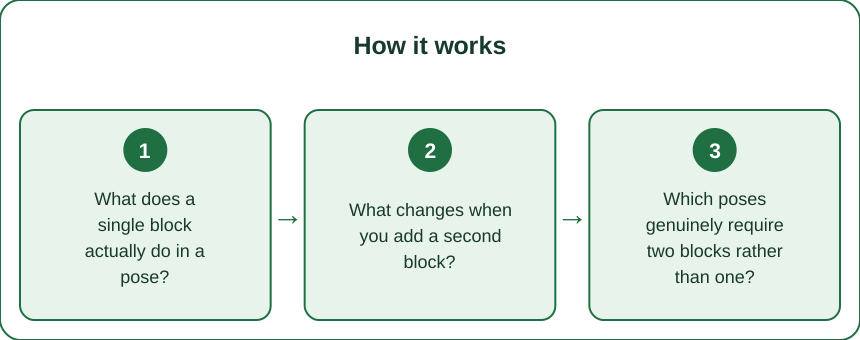
What does a single block actually do in a pose?
A single block most often fills a specific, one-sided gap — under one hand in a triangle pose when your hamstrings don’t yet allow your hand to reach the floor, or under one hip in a seated twist. It compensates for asymmetric flexibility or reach without changing the overall shape of the pose much.
This is the more commonly needed use case for standing and balancing poses, which is why most beginners start with one.
What changes when you add a second block?
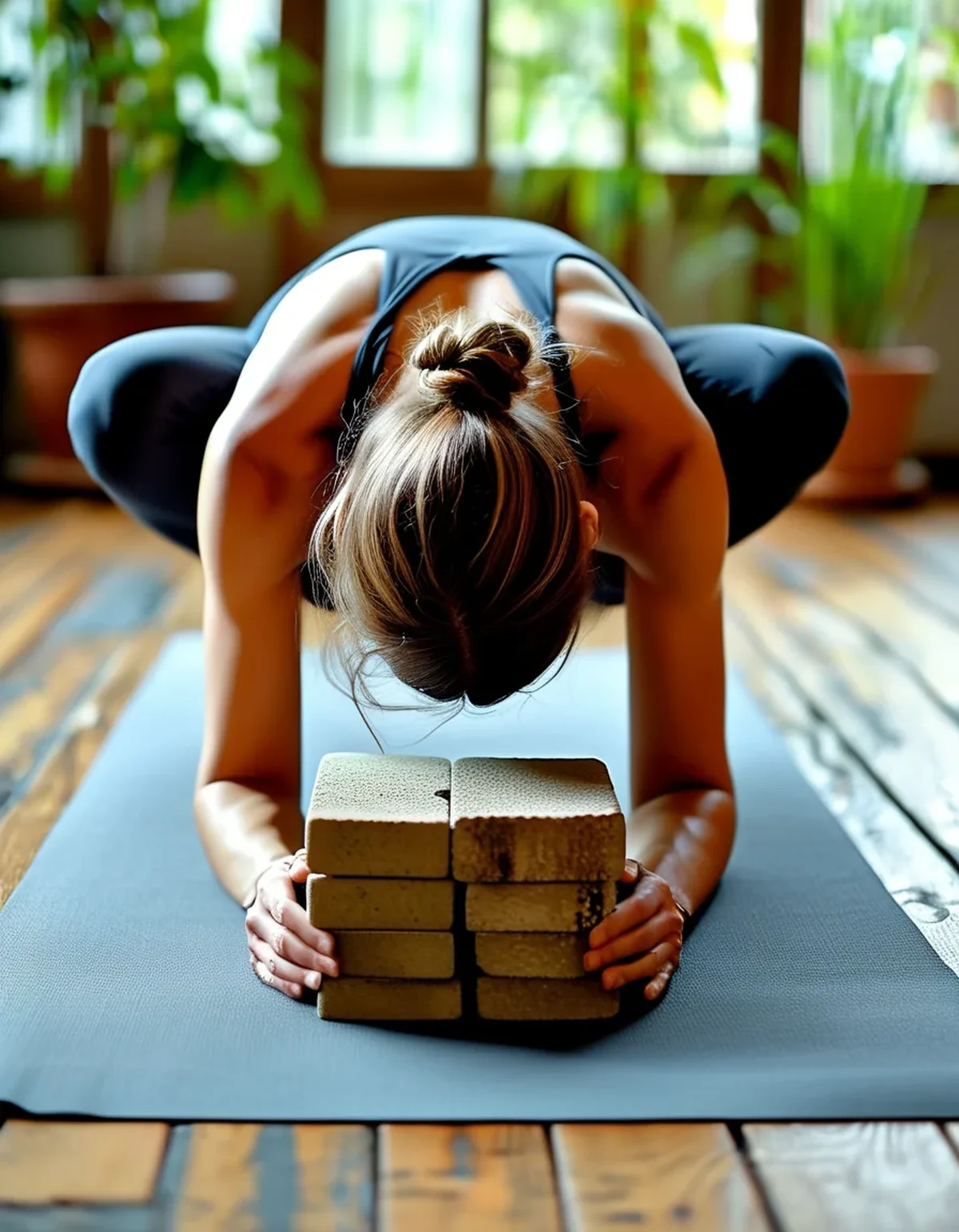
Two blocks let you build a symmetrical, even platform — both hands supported at the same height in a forward fold, or both blocks stacked to create elevation under the hips or back for a restorative pose like supported bridge. This is a fundamentally different function: not compensating for a gap, but constructing a stable surface your body can fully rest on or push evenly from.
Without a second block, poses that need this even platform either don’t work at all or force asymmetric compensation that can create unintended strain on one side.
Which poses genuinely require two blocks rather than one?
Supported bridge or supported fish pose, where blocks (often at two different heights, one under the shoulder blades and one under the head) create a restorative backbend, are difficult to replicate safely with a single block. Wide-legged forward folds with two-hand support are another common case — one hand reaching to a single block while the other hovers creates uneven shoulder loading.
What Nobody Tells You About Block Quantity
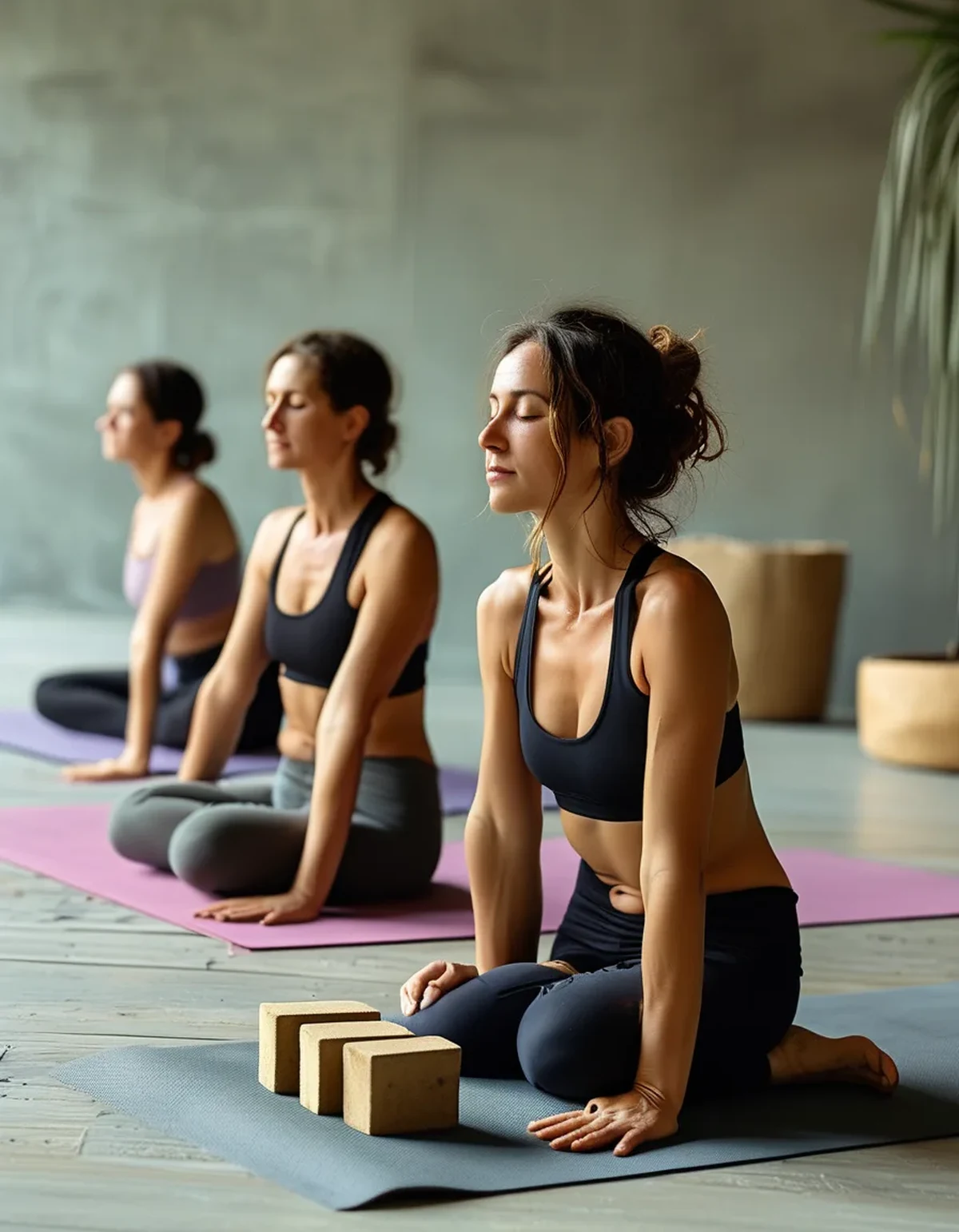
Cork blocks and foam blocks behave differently even at the same stated height, so a pair that’s “matched” in material matters more than people realize — mixing a cork and foam block in a stacked restorative setup creates uneven give under load, which can undermine the exact stability you’re using blocks to create.
Also underrated: two blocks let you create graduated height (one flat, one on its side or end) for a custom elevation that a single block’s three fixed heights can’t offer alone.
Is it worth buying a second block, or can you improvise?
If you’re regularly doing restorative or yin practice, a second matching block is worth the relatively low cost — improvised alternatives (books, a rolled blanket) rarely match the firm, consistent support blocks are designed for, especially under weight-bearing points like hips or the sacrum.
FAQ: Yoga Block Quantity Questions, Answered
Do beginners need two blocks right away?
Not immediately — one block covers most standing pose modifications; a second becomes more useful once you’re doing restorative or deeper seated practice.
Does block material matter more with two than with one?
Yes, mismatched materials (cork vs. foam) create uneven support when stacked or used symmetrically, which matters more with two blocks working together.
Can foam blocks handle full bodyweight support for restorative poses?
Yes, quality foam blocks are designed for weight-bearing use, though cork tends to feel more stable under sustained pressure over a full restorative hold.
TL;DR:
- A single block compensates for one-sided gaps in flexibility or reach
- A pair of blocks builds a symmetrical, stable platform for restorative and two-hand poses
- Matching block material matters more when stacking or using blocks together
- A second block is most worth adding once you’re doing regular restorative practice
See It in Motion
Seen here: High Waist Bootcut Yoga Pants — shop it on bubblelime.com
Keep Reading
This article is for general informational and styling purposes only. Fit, sizing, and product availability may vary.