Why Your Block Feels Right in One Pose and Wrong in the Next
Quick Answer: A standard block is roughly 4 by 6 by 9 inches, which gives you three distinct heights, and the right one changes pose by pose. Use the tallest setting when the goal is bringing the floor up to your hand, the medium setting when the goal is stability under a limb, and the flat setting when the goal is a small lift or something to squeeze. Switching heights mid-sequence is normal practice, not a sign you chose wrong.
Your block is perfect in triangle and useless in half moon. That is not a flaw in the block or in you. Those two poses need different heights, and most people never flip it.
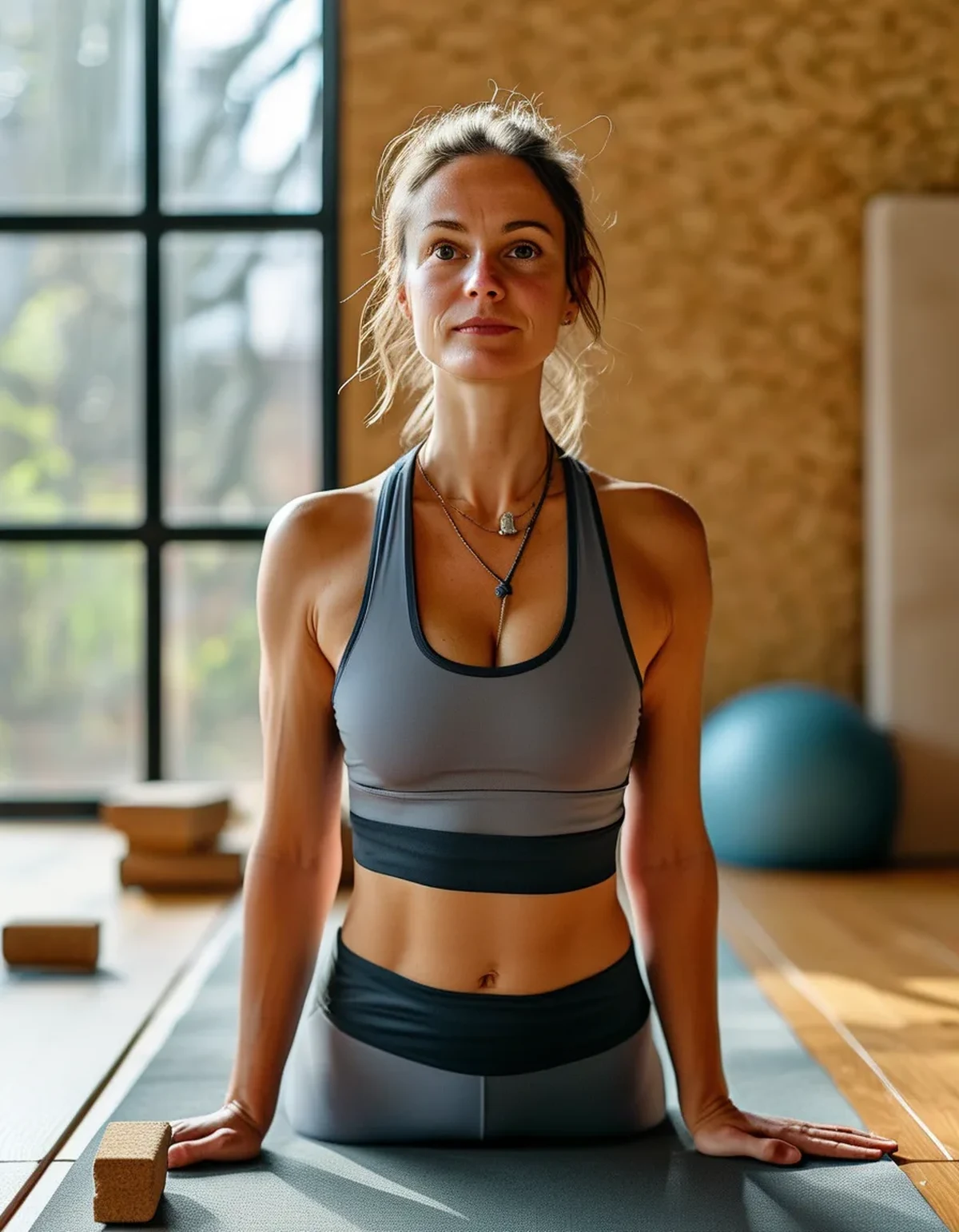
Which block height belongs in which pose?
Think of the three settings as three different jobs.
Tall setting, about 9 inches. This is the reach-the-floor height. It belongs in triangle, half moon, revolved poses, and any standing pose where the hand is meant to reach the ground but reaching it costs you the shape of the spine. If lowering further would round your back or collapse the chest, you are on the right height.
Medium setting, about 6 inches. This is the support-and-stabilize height. It goes under the hips in a supported bridge, under the hand in a lunge, between the thighs in a bridge to keep the knees tracking, or under the forehead in a forward fold.
Flat setting, about 4 inches. This is the small-lift height. Under the heels in a squat, under the sit bones in a seated forward fold, or under the sacrum in a restorative bridge where a taller lift would be too much.
The practical version: decide what the block is for before deciding how tall it should be. Reaching the floor, supporting a joint, and creating a small lift are three different intentions, and each maps to a height.
Most classes move fast enough that people default to whatever height the block landed on. Flipping it takes two seconds and changes the pose entirely.
Why does the same height feel different on different days?
Because the variable is not the block, it is your available range at that moment.
Hamstring and hip flexibility fluctuate meaningfully with time of day, temperature, training load, hydration, and sleep. Morning practice generally requires more height than evening practice for the same person, because tissue is stiffer and the nervous system is less willing to allow end range early in the day.
Training load matters more than most people expect. Heavy leg training in the previous 48 hours reliably reduces available range, and a block height that felt generous last week can feel insufficient after a hard session.
The useful habit is to test the height in the first version of a pose rather than assume it. Set up, take one breath, and if the spine is rounding or the chest is turning toward the floor, go taller. That one-breath check is the entire skill.
There is nothing regressive about needing a taller block than last month. Range is a state, not a rank, and the block exists to keep the shape correct while the state varies.
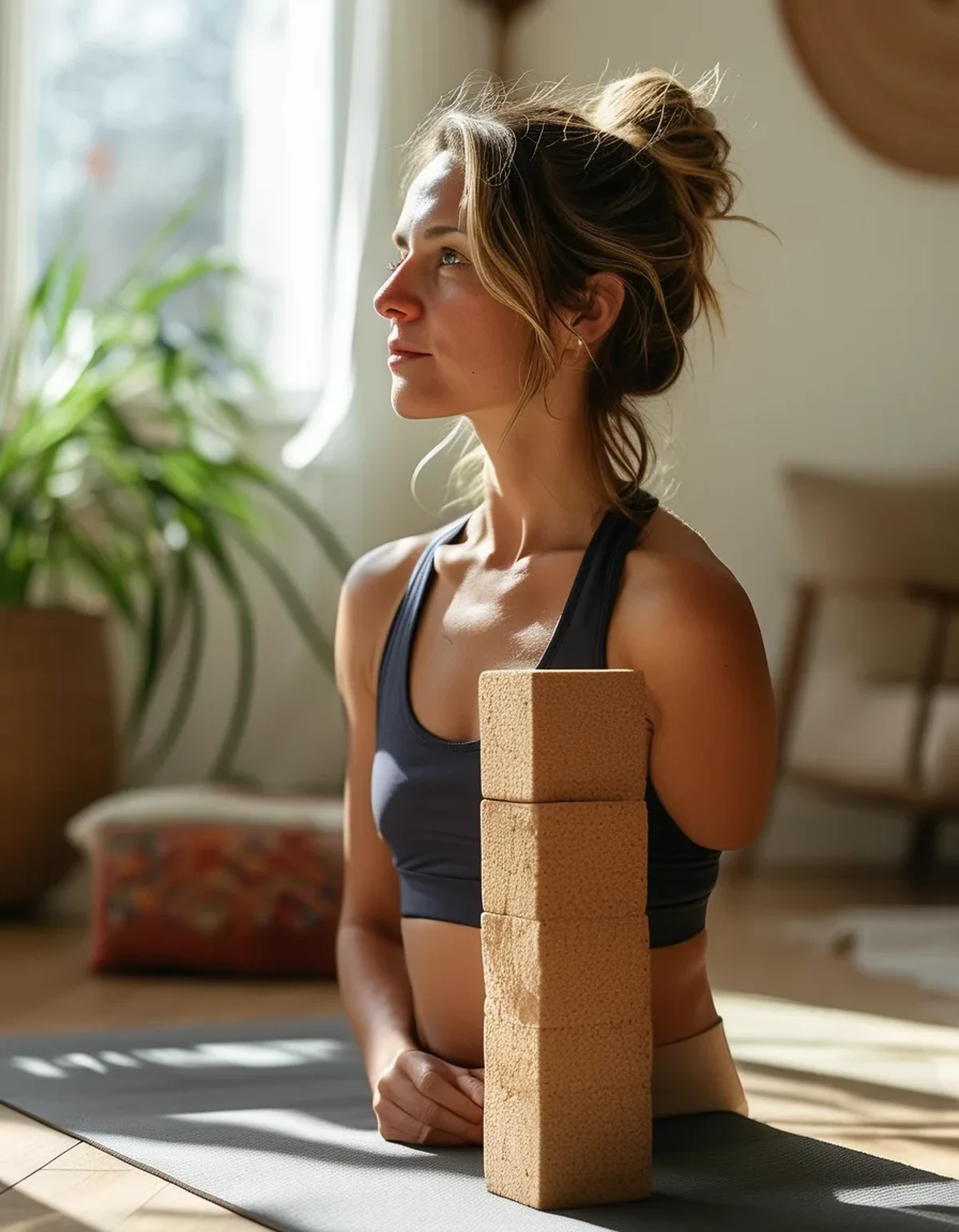
5 Block Mistakes Almost Everyone Makes
1. Using the block as a place to land rather than a place to press. A block you rest on passively does much less than a block you actively press into. Pressing engages the arm and the side body and gives you something to lengthen away from.
2. Placing it too far forward in triangle. The block belongs roughly below the shoulder or slightly forward of the front ankle, not way out at the toes. Too far forward and the shoulder rolls in and the chest closes, which is the exact thing the block was supposed to prevent.
3. Squeezing a block between the knees when the goal was the inner thighs. The knees are a joint, not a muscle. Placing the block higher, between the thighs, gives the adductors something to work against and keeps the pressure off the knee joint itself.
4. One block when the pose needs two. Seated forward folds, supported fish, and most restorative shapes are two-block poses. Using one because you only own one is a very common and very fixable constraint.
5. Choosing foam when you need cork, or the reverse. Cork is heavy, stable, and unyielding, which is what you want under a hand in a standing balance. Foam is light and slightly compressive, which is more comfortable under bone in a restorative pose. Owning one of each covers more ground than owning two of the same.
The one that catches experienced practitioners: a block under the sacrum in bridge should sit flat on the widest face, not on edge. On edge it concentrates pressure on a small area of bone, which is uncomfortable and unnecessary, and the flat face gives the same lift with a much better contact surface.
Do blocks actually help or do they hold you back?
They help, and the concern behind that question is worth addressing directly.
The fear is that a prop lets you avoid the work and therefore prevents progress. In practice the opposite is more common: without a block, people reach the floor by rounding the spine, collapsing the chest, or shifting weight into a position the pose was not designed to load. That version practices the compensation rather than the pose.
A block lets you hold the intended shape, which means the intended tissues get the intended stimulus. Over weeks, that is what changes your range.
There is also a load-management argument. Holding a well-supported shape for longer produces more adaptation than holding a poor shape briefly, and blocks make longer holds tolerable.
The honest caveat: a prop used to avoid any sensation at all does not create adaptation either. The target is a supported shape where you still feel a clear, tolerable stretch or effort, not a shape where everything is comfortable.
This is general information, not medical advice. Sharp pain, joint pain rather than muscle sensation, or numbness and tingling are signals to come out of the pose and, if they persist, to see a professional.
FAQ: Yoga Block Questions, Answered
Cork or foam, if I only buy one?
Cork, for most people. It is stable enough to press into during standing poses, which is where a wobbling block is most disruptive. The trade-off is weight and a harder surface under bone.
Is a book a reasonable substitute?
For a flat lift under the hips, yes. For anything you press into or balance on, no, because books slide and compress unevenly. A stack of firm books taped together works better than a single one.
How do I know when to stop using a block in a pose?
Remove it and check the spine. If you can reach the lower position without rounding the back, losing the chest rotation, or shifting the weight, you no longer need it in that pose. Test occasionally rather than deciding in advance.
TL;DR:
- Three block heights map to three jobs: reach the floor, support a joint, create a small lift
- Range fluctuates day to day, so test the height with one breath instead of assuming
- Press into the block actively rather than resting on it
- Two blocks unlock most seated and restorative shapes that one block cannot
Flip your block to the tall setting for the first standing pose of your next practice and see what changes. It is the cheapest upgrade in the room.
See It in Motion
Seen here: High Waist Bootcut Yoga Pants with Side Pockets — shop it on bubblelime.com
Keep Reading
This article is for general informational and styling purposes only. Fit, sizing, and product availability may vary.