Thirty Ways to Use Two Yoga Blocks: The Most Underrated Prop in the Studio
The yoga block gets bought, used once under a hand in triangle, and shelved — while teachers quietly use it for everything: extension, feedback, resistance, rest. The block guide: the philosophy, the pose-by-pose applications and the two-block practice.
The Philosophy Reframed
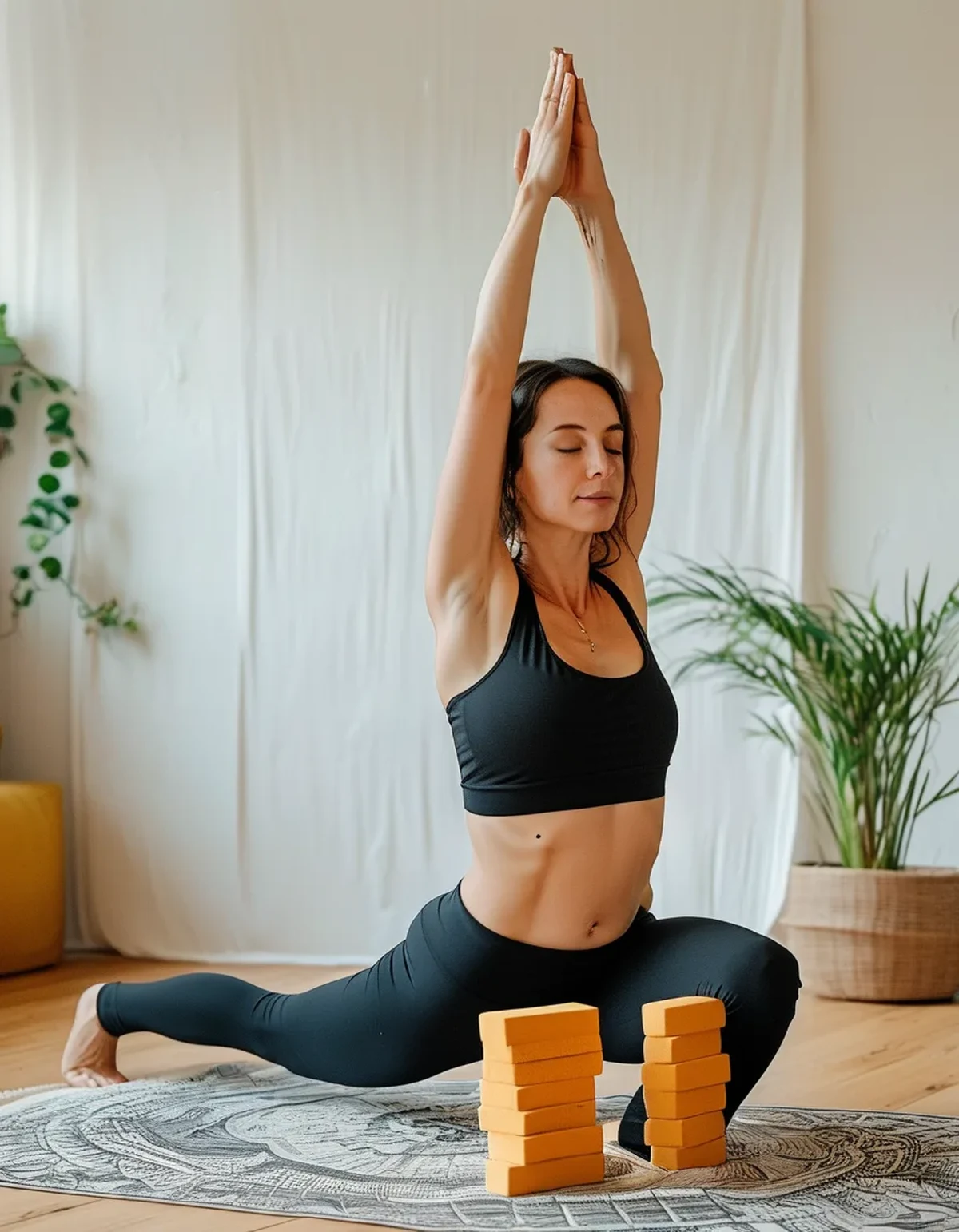
What blocks are actually for: the floor-raiser truth (the block bringing the floor UP — the hamstrings that don’t reach being served, not shamed; the props-as-access doctrine from the props guide), the feedback tool (the block squeezed between thighs teaching inner-line engagement — the block as a form coach; the touch-target uses: the squat-depth block from the strength doctrine), the boundary function (the block as a STOP — the hypermobile practice from the hypermobility doctrine using blocks to prevent over-deepening; the range managed both directions), the resistance role (the block as light load — the press-and-hold work; the arms-and-core uses below), the rest architecture (the restorative heights — the three block orientations: low, medium, tall; the support geometry from the restorative doctrine), and the two-block standard (the pair being the real purchase — the cork-versus-foam choice from the props doctrine: the cork stability for standing support, the foam comfort for restorative).
The Standing-and-Balance Applications
Blocks in the flow: the half-lift and forward-fold hands (the blocks under hands preserving the flat back — the hamstring-length honesty), the triangle-and-side-angle support (the classic use done RIGHT — the block at the shin-height that keeps the chest open; the reaching-the-floor-by-collapsing error fixed), the lunge stability (the blocks flanking the front foot in low lunges — the wobbly-transition insurance from the beginner doctrine), the balance training (the block-under-back-heel in standing poses — the standing on the block itself as the advanced balance challenge from the balance doctrine), the revolved-pose access (the block outside the front foot in twists — the rotation earned without losing length per the spine doctrine), and the down-dog-to-lunge assist (the step-through that blocks under hands make possible — the shortest-arms problem solved; the transition frustration deleted).
The Strength Applications
The block as load and cue: the thigh squeeze (the block between thighs in bridge, chair and forearm plank — the inner-line and core connection; the pelvic-floor coordination bonus from the floor doctrine), the block push-up (the hands-on-blocks depth extension OR the chest-target underneath — the range adjusted both ways), the boat-pose pass (the block passed hands-to-feet in boat — the core circuit from the core doctrine), the arm-strength holds (the block pressed overhead in chair, the hover-hold above the block — the light-load endurance per the endurance doctrine), the hip-work anchor (the block under the sacrum for supported bridge — the elevator to loaded hip work; the single-leg bridge progressions from the glute doctrine), and the wrist-relief handles (the blocks-as-handles for tender wrists in plank work — the neutral-wrist option from the wrist doctrine).
The Restorative Double Life
The blocks at rest: the supported-bridge classic (the block under the sacrum at chosen height — the front-line opening that desk days beg for per the restorative doctrine), the chest-opener setup (the block lengthwise between shoulder blades, the second under the head — the DIY heart-opener; the doorway-stretch’s lying cousin from the posture doctrine), the legs-up variation (the blocks under hips in legs-up-the-wall — the gentle inversion upgrade from the lymph doctrine), the forehead rest (the block under the forehead in child’s pose — the neck ease that changes the pose), the seated-height fix (the block under sitting bones in meditation — the cross-legged comfort that transforms sitting practice per the meditation doctrine), the wind-down sequence (the three-pose block evening: supported bridge, chest opener, child’s pose — the ten-minute downshift from the evening doctrine), and the closing pitch (the twenty-dollar pair earning daily use across strength, flow and rest — the most cost-effective equipment in the practice; the block, finally, unshelved). Raise the floor, squeeze for feedback, build the rest: the humble block, fully employed.
Blocks bring the floor up, coach your form, add resistance and build restorative shapes — use the pair under hands in folds, between thighs in bridges, beneath the sacrum at night. Cork for standing support, foam for rest; twenty dollars, daily use.
See It in Motion
Seen here: Racerback Tank Top - White — shop similar styles on bubblelime.com
Keep Reading
This article is for general informational and styling purposes only. Fit, sizing, and product availability may vary.