Why a Simple Chair Unlocks Restorative Yoga Poses a Mat Alone Never Can
Quick Answer: A chair provides stable, elevated, weight-bearing support that ground-level props like blocks and bolsters simply can’t offer, letting the body fully release into supported backbends, forward folds, and inversions without needing the strength or flexibility to hold or lower into those positions unsupported — which makes several restorative poses accessible to bodies that mat-only props leave out.
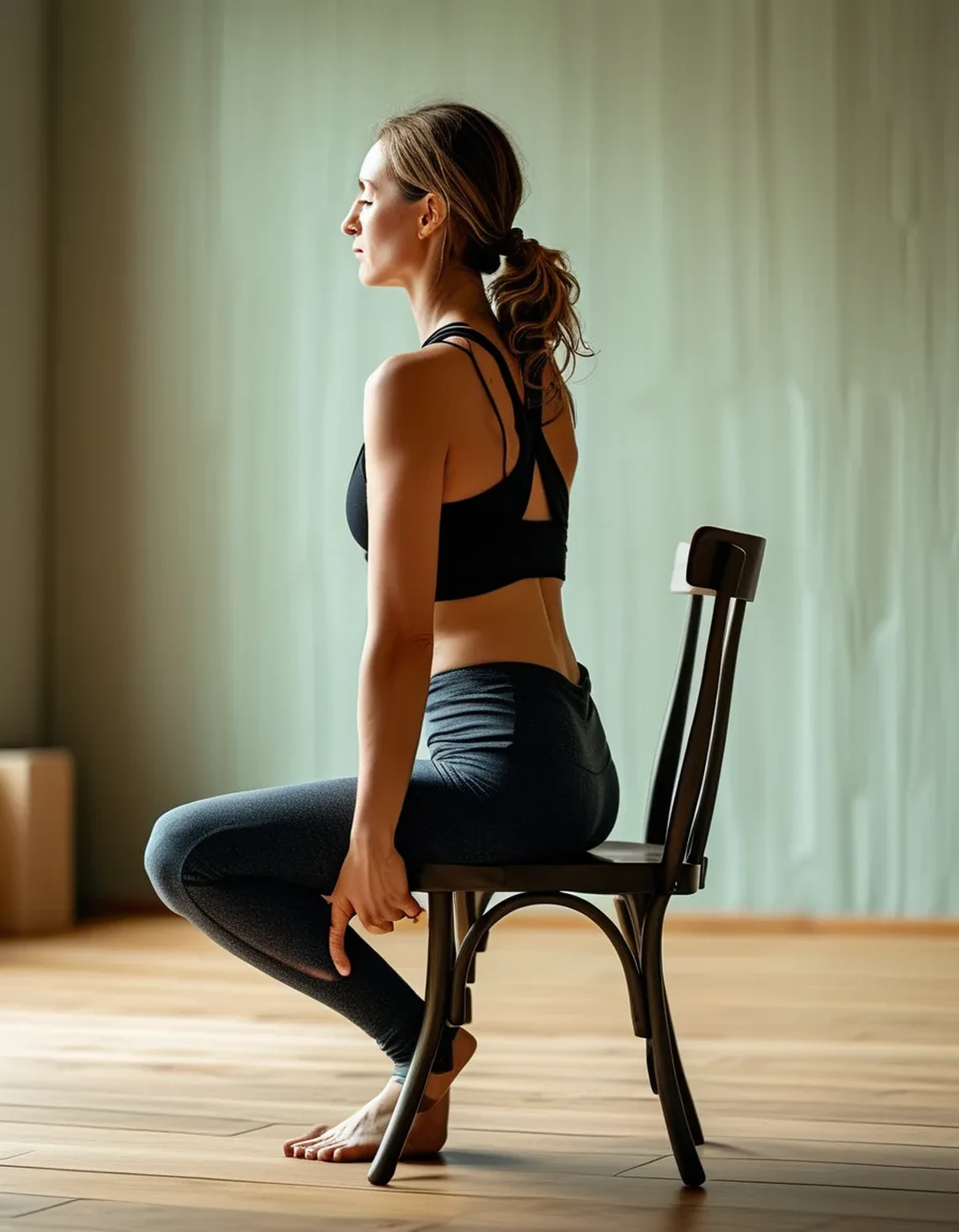
Most restorative prop conversations stay focused on the mat, but a plain chair does something none of those ground-level props can: it takes weight-bearing support to a height the floor just can’t offer.
What can a chair actually do that ground-level props like bolsters and blocks can’t?
A chair provides stable support at an elevated height, which allows certain restorative poses — supported backbends over the chair seat, forward folds resting the torso on the seat, legs-up positions using the chair as an elevated base — to be held with far less strain than attempting a similar release using only ground-level props, since gravity and the elevated support do more of the work than the body has to.
Why does elevated support matter specifically for restorative backbends?
A supported backbend draped over a chair seat lets the spine extend into a gentle arch while the chair bears the weight of the upper body, which is a meaningfully different (and for many bodies, more accessible) experience than a bolster-based floor backbend, where the body still has to manage more of its own weight distribution across a lower, less structured support surface.
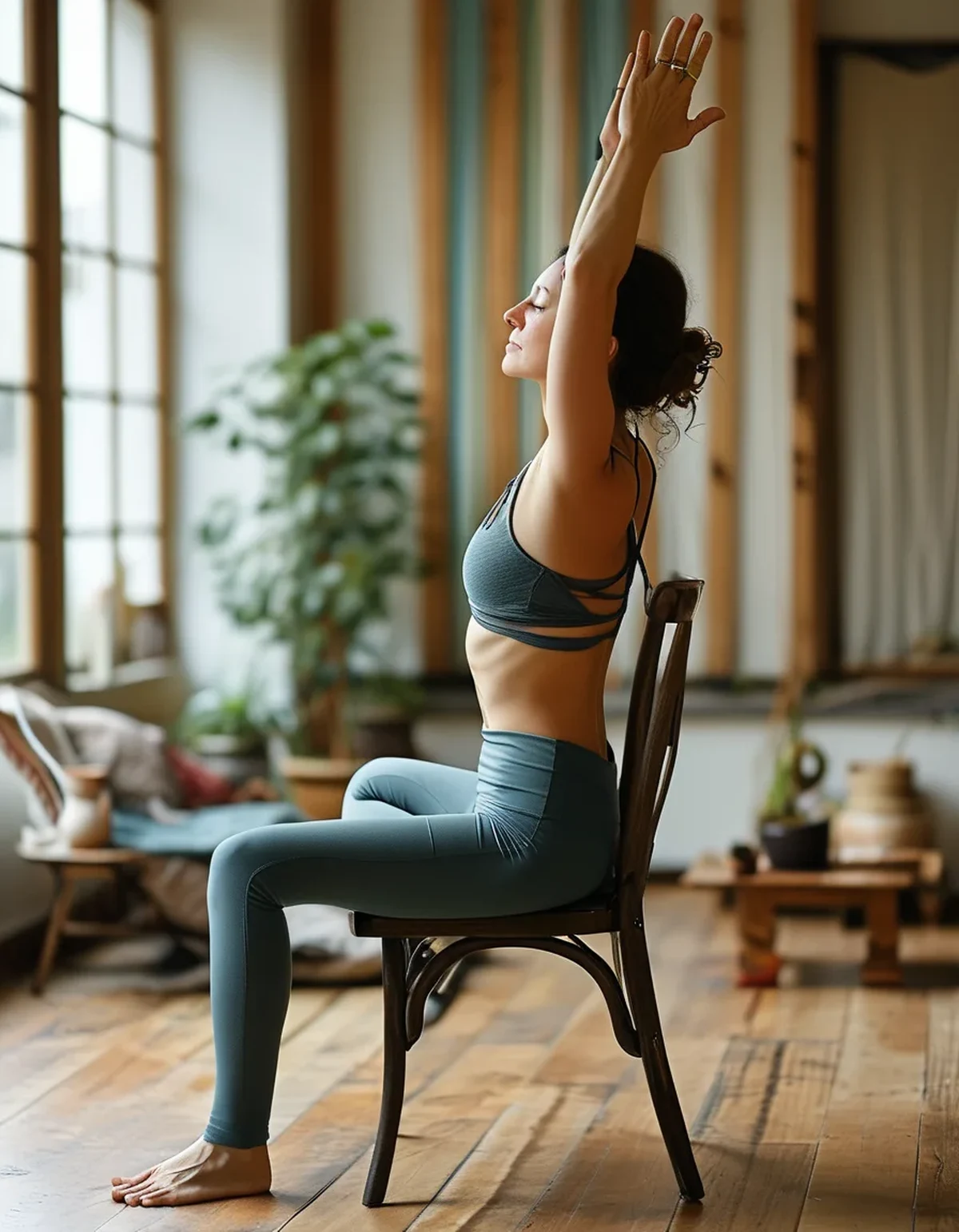
Does using a chair help with poses that are typically difficult for limited hip or shoulder mobility?
Often, yes — seated or supported poses using a chair can reduce the range of motion demand at the hips or shoulders compared to the same pose attempted on the floor, since the elevated seat effectively shortens the distance the body needs to fold, extend, or reach, making certain restorative shapes accessible to people whose mobility would otherwise put a floor-based version out of reach.
Is a regular household chair actually appropriate, or does it need to be a specific yoga chair?
A sturdy, armless, straight-backed household chair is generally suitable for most restorative chair-supported poses, provided it’s stable and won’t tip or slide — dedicated yoga chairs exist and offer some additional design conveniences, but they’re not strictly necessary for most home practice uses of this prop.
FAQ: Chair as a Restorative Yoga Prop, Answered
Is a chair appropriate for beginners, or is this a more advanced prop?
A chair is often considered particularly beginner-friendly, since the added stability and elevation typically make poses more accessible, not less, compared to floor-only versions.
Should a chair be padded or cushioned for restorative use?
A folded blanket or towel over the seat is commonly used for comfort during longer holds, though it’s not strictly required depending on the specific pose and personal preference.
Can a chair replace a bolster entirely in a restorative practice?
Not entirely — a chair and a bolster serve somewhat different support functions (elevated versus ground-level), so many restorative sequences use both rather than one replacing the other.
TL;DR:
- A chair offers stable, elevated, weight-bearing support that ground-level props can’t replicate
- Supported backbends over a chair let the spine extend with much less self-managed effort
- Chair-supported poses can reduce the hip and shoulder mobility demand of similar floor poses
- A sturdy household chair is generally sufficient without needing a dedicated yoga-specific chair
If restorative practice has felt limited to what a mat and a bolster can offer, a chair opens up a genuinely different category of supported poses worth trying.
See It in Motion
Seen here: Racerback Tank Top - White — shop similar styles on bubblelime.com
Keep Reading
This article is for general informational and styling purposes only. Fit, sizing, and product availability may vary.